Tuesday, April 13, 2010

How does your garden grow?

It seems just a few days ago we were asking…

“When will the flowers get here??


Well…we have flowers everywhere now and we wonder…

Do you plant…


The perpetually friendly face of gerbera daisies??


The petite humility of a pansy?Green Thumbers 020


The over joyous osteos?Green Thumbers 032


The lovingly patient ranunculus?

Green Thumbers 034 


The politely pleasant petunia?Green Thumbers 036


The quiet, thoughtful fern?

Green Thumbers 033


The timeless geranium?

Green Thumbers 063

I just wonder friends…what do you plant in your garden?

Thursday, April 8, 2010

You say Potatoe I say Potato

Potatoes are relatively easy to grow and require little space.  It’s even feasible to grow potatoes in containers!  Potatoes are best planted now in early to mid spring because maximal tuber formation occurs at soil temperatures between 60° and 70°F. The tubers fail to form when the soil temperature reaches 80°F. Potatoes withstand light frosts in the spring.

Consider these varieties:

Green Thumbers 072 Green Thumbers 069 Green Thumbers 070 Green Thumbers 071

Dakota Pearl has a very smooth, uniform, shape.  It has round tubers with bright white skin and flesh. Good for chipping and mashing. Mid season maturity. Disease resistant. Stores well

Kennebec is a large potato, and it looks very pretty with its light tan skin, nice uniform appearance and attractive white fleshy insides. Thin skin peels quickly. Resists blight. High yield. Winters well for a long storage time.

Yukon Gold is the most famous of the new wave of yellow-fleshed varieties now available. Long popular in Europe, these have good flavor and moist flesh, which many people claim requires less of the fattening condiments required by other potatoes. All-purpose. Early to mid-season. Keeps well.

Red Norland is a round tuber type with bright red skin. Medium yield potential. Good for boiling, roasting and salad.

Sunday, April 4, 2010

Vegetable Gardens

A sight such as this…is beautiful, but rarely seen…
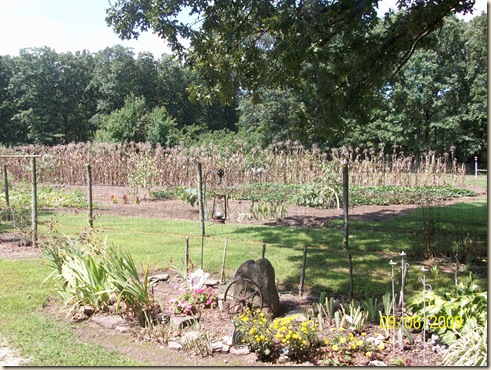
Holidays 2009 092

Most families lack the land, the time, and the knowledge to host a large, traditional garden of vegetables lined up in proud rows ready to fight against sun, wind, and whatever comes there way until harvest.

For the last couple of decades, vegetable gardening has been a quiet sport contended by retirees or the rare few, but it is now ‘en vogue’ to think local, think healthy and of course – think green.

As a result more and more families are thinking outside of the box formerly known as the vegetable garden…


Holidays 2009 061

Would you believe there are 5 tomato plants, 3 pepper plants, 10 onion sets, a handful of herbs and even a blueberry bush growing among this landscape of ornamental grasses and newly planted cutting flowers?
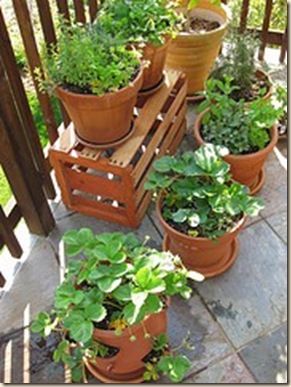
container gardening

Of course container gardening is also a hot topic!!


If you already have decorative planters of flowers, consider mixing lettuce for cutting such as “Black-seeded Simpson” or “Buttercrunch” creating edible greenery in your containers.  For a punch of color consider “kale” or “swiss chard”.


Some gardeners are creating signature touches by including a strawberrystrawberry plant or pepper plant in each container they have…can you imagine…a bright red strawberry!!! What a wonderful surprise!!!


Thoughts to consider when planning your vegetable garden:

- What do you want?

Spend some time at dinner one evening jotting down all that the fruits and vegetables you would like to grow. The next night, highlight your top priorities on the list.

- How much time?

Write down how much time you can dedicate each day and each week to tending…including watering, weeding, and harvest.

- How much space?

Decide how many containers how many sections of your yard or current flower beds you can dedicate.

After you have this information on paper, draw a sketch of the spaces you are considering.

-Highlight or shade orange areas that are full sun or receive sunlight in morning and afternoon

-Highlight or shade yellow areas that are part sun (shaded partially in either afternoon or morning)

- Highlight or shade blue areas that are mostly shady

Now you can match up the types of plants from your priority list that match that spaces you currently have available.  A little pocket here and there can really put to use when you have the right plants in the right place. 

Helpful Hint: For busy gardeners, put your plants near areas that you use…walkways, patios, and near the most common entrance of your home.  This will make it easier to water and not forget your plants when your schedule gets hectic!

family gardening

Success is motivating.

Start small.

Think outside the box.

When you enjoy the fun and taste of harvest…you will want to add more next year!

For more on starting your vegetable garden on a budget…consider Starting Seeds with a little help from Dr. Earth!

Dr. Earth Tea

Fertilizer Tea...it's easy!

Fill a bucket with water. Use 1 cup of Dr. Earth Starter Fertilizer for every gallon of water. (A good method is to use 5 cups in a 5 gallon bucket)

Stir and let the mixture sit for 24 hours.

After 24 hours, stir well. Strain the solids and mulch soilds around the root zone.

Use the liquid tea for foliar feed or deep root feeding.

Use 1-2 cups per plant (2-4 cups for larger plants)

This can be done at planting and repeated monthly if desired.

---------------------------------

Compost Tea


You will need a - 5gallon bucket.
Fill the bucket 3/4 full with water and let it sit for 24 hours (to allow chlorine gas to evaporate).

After 24 hours, add approximately 1 gallon of Dr. Earth Pro-biotic soil and 1 ounce of unsulfured molasses (extra food for the microbes!) to the water.

Stir the soil and water well until the soil is completely wet and the water is a rich, dark brown color. Use your tea within 24 hours of ''brewing.''

How to apply-

Soil Drench Application-
Apply directly to the soil around your plants at a rate of 1 cup ''tea'' to your plants monthly.

Foliar Application- Sprayer or Watering can -
Filter resulting tea through folded cheesecloth.

If using a watering can, pour liquid full strength over foliage of plants as you water tea mixture in to the planting area.

Apply the strained tea with a standard pump sprayer both to the top and bottom on leaves.

Do not throw the solid material away; add it to the soil as mulch around any plant in the garden.

Friday, March 26, 2010

A peek at the Chicago Flower and Garden Show

Right away I noticed tulips and hyacinths tucked into every kind of landscape!  I L-O-ve this!!! In the northern tundra we wait soooo long for spring to bloom.  Spring bulbs give us color before our shrubs and perennials have warmed up for the season.  The whole left from spring bulbs is the perfect place to fill in annuals for color punch the rest of the season…

Another trend that I L-O-ve was the frequent use of kale and purple cabbage.  Again, I L-O-ve this because it lends cool-tolerant color for early spring and late autumn.  Flower show & Kane County 046

This picture shows cacti…but replacing it with kale would be a really great statement especially for early spring or late fall!! Flower show & Kane County 038

My favorite is always LUCIOUS containers!!!

Dusty Miller is a fun surprise here…Flower show & Kane County 065

The boxwood is a great backdrop for this colorful mix of bulbs, annuals, and trailing vines…

Flower show & Kane County 050

This monochromatic scheme brings elegance and tranquility --- plus it can be over-wintered indoors…prolonging your investment

Flower show & Kane County 054

The Green Thumbers floral team started talking in January about the importance of botanicals in arrangements this year…and guess what….they were right on!!!!  (No surprise though:) )

Flower show & Kane County 064

Flower show & Kane County 041 

Hope you are inspired…it’s time to start getting dirty hands!!!!